

Subtracting
In order to write the way that I want to, I have to put everything that takes up space on trial for its life

On Friday, I received an email from the Contracts Manager at my publishing house, enquiring about a contract issued to me for a new book acquisition.
“I’m sorry,” I wrote back. “I haven’t even had a chance to open it. Can you give me until Monday?”
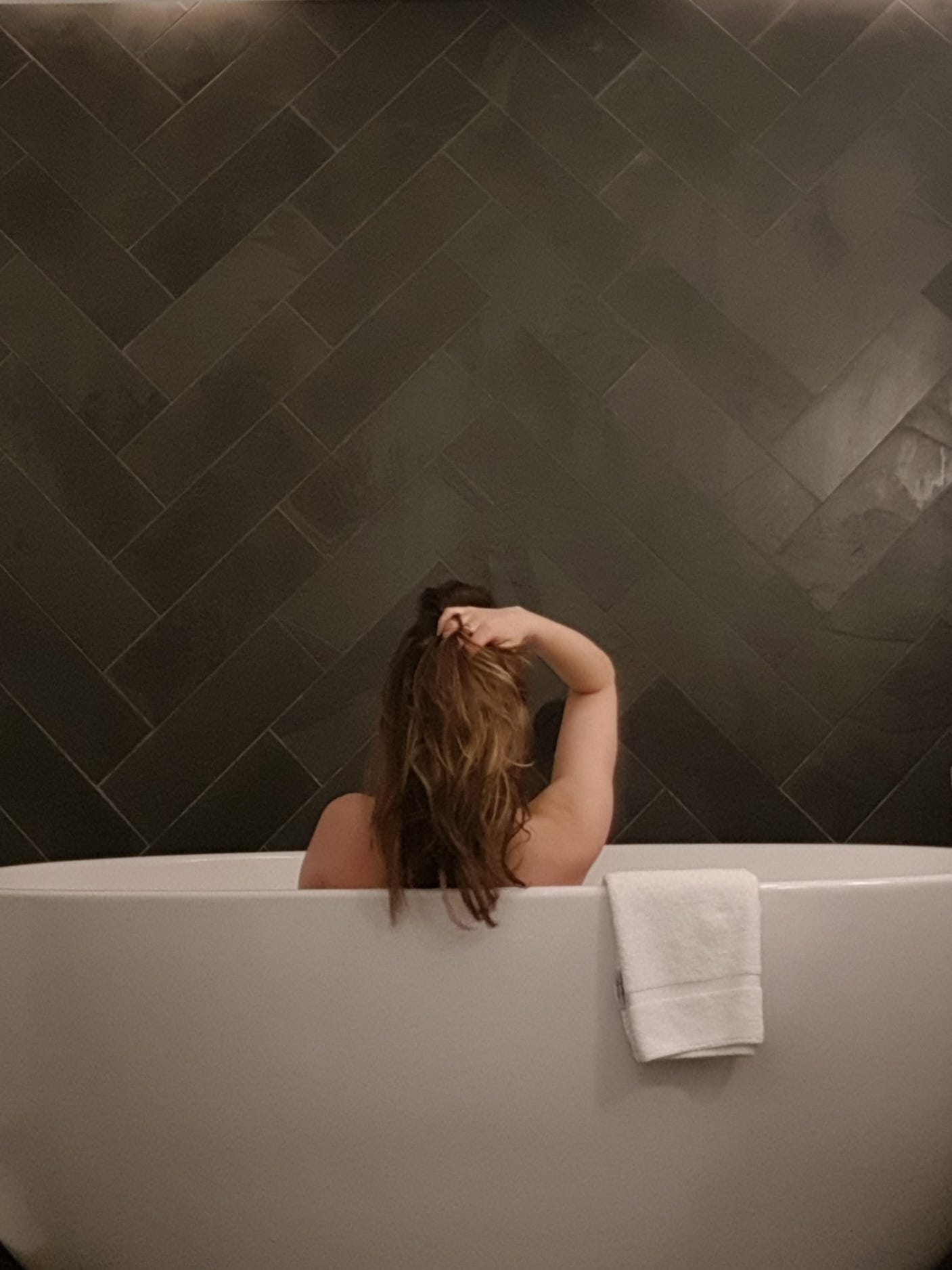
I felt ashamed. That contract had been sitting in my inbox for five weeks, and I had no justifiable reason for ignoring it for so long. I’d spent so many days in that period taking long baths, streaming shows on the projector my husband would set up for the exact purpose of my contemplative soaking, and drinking tea or eating popcorn. I knew that contract was in my inbox: I just felt incapable of processing it. In the tub of my upstairs bathroom, I was cocooned from the consequences of what that meant — sheltered from an inbox, and a digital world, that felt so ridiculously demanding of my attention the moment I emerged.
I know I am not the only one seeking such such cocoons, whatever they might look like for others. A friend recently returned to her city job from a long weekend in the country, where her phone was not on hand, and immediately wished she could go back to a phone-less existence. My husband has brought up Brick with me a couple of times, and the possible benefits of a dumb phone at least three. I deleted the Instagram app from my phone again (I still browse it on Chrome but it’s more annoying to do so that way; I know I’ll have to reinstall it soon) and read Alison Larsen Rice’s Substack about the years she’s getting back now that she’s deleted Instagram.
It seems we’re all collectively exhausted by the constant barrage of information, of news, of access (even to things we sought ourselves). It’s not even just Meta related. Updates on schooling, for example, used to come home with the students, but now our phones ping at all hours of the day from the school app and the classroom app and even parents’ What’s App groups. This, for me, is six separate channels of information all pinging with double-up content.
No wonder my brain can’t interpret a contract, on which hinges the remuneration for my labour. I feel like I am at a crisis point. My attention span has been decimated: A novel I read now has to work harder (and faster) than it ever has before to get me to stay with it. Ditto a show that wants my full attention, a conversation which warrants it, my children who deserve it. And yet, for all the noise my phone brings, metaphorical noise I won’t tolerate elsewhere, it is still so strangely addictive to me.
How do I emerge from this stupour? I have asked myself. How can I take back control of my life?
The answer of course, is a mechanism/learning tool on which every writing workshop depends. Subtracting. It is the tool of an excellent editor; one that ought to be more frequently employed in this day and age. In my university classes, I put my students’ drafts up on the screen (with their permission of course) and remind them of Francine Prose’s advice that every word must be put on trial for its life. As we filter through sentences laden with excess (or a lack of detail and specificity) they realise how efficient sentences can be, at no cost to their beauty.
I realised during those long baths that my life needs to be scrutinised in much the same way. Last week I opened the second drawer of my bedside table, and found a fifth box of incense sticks. I thought I only owned the two that I had bought, once after a trip to Byron Bay, but then I remembered the pack that came in a gift from a friend and the pack that came in a PR package. I couldn’t even place the fifth packet, but I knew I didn’t purchase it because it wasn’t ‘pretty’.
My second desk drawer is similarly incriminating, except this one is brimming with boxes of Loco Love chocolates and beauty samples. This is in addition to the basket of beauty products that sits on the chest at the top of my stairs. All of these nooks and crannies are evidence of a life that needs editing, all of them pose questions that warrant an almost-existential crisis: How did I end up with so many candles? Does this make me a lady cliche? What’s with all the face serums? Do they even suit my skincare needs? Should I hold on to them, just in case, just because they were free? What about all the lip balms, and the thing in the bookshelf from the Mother’s Day school stall that serves no purpose but I can’t bear to throw away?
And how does it all connect to my perceived inability to read a contract, or to get back onto one of many WIPs? I have literally started and abandoned four novels; books that might have generated an income, or changed my life in some way, as all stories do (and I do not mean financially). I have spent so much time on writing-adjacent work, some of which could be considered noble, at a cost to the career I could have, and should have, been building.
And yet, I never saw all this intersect.
Why?
Everytime I sat in that bath, I was subconsciously subtracting myself from the work and the world. I was opting out. And in that space, I realised how much more I could edit and subtract. I thought about how little I needed (seriously, some sunshine and a good book and a pastry), and how much has been sold to us (apps to track our movements, apps to put our phones away, a newer, better, shinier everything at every turn) and how I felt like I had to buy something at every small shop I ever visited because I felt guilty just browsing, and how when I needed a dopamine hit I would hop online and add things to my cart and if I was able to come to my senses and close the browser, the shop would email me the next day via a Shop account I don’t remember setting up to tell me they had saved my cart.
When you think about it, there is so much we can subtract from our lives in addition to social media. Fast fashion, regular nail appointments, the pressure to get botox, more than one vase. We all have a poison we can filter out, and things we can justify keeping in.
Subtraction is not just a creative tool, but the facilitation of one. But just for good measure, I’ve also added something in as well, and signed with a literary agent. I didn’t think too much about who and went with someone who has supported my work (with no benefit to himself) for a long time. I guess in that way I was also subtracting myself from the pressure to read a contract. Sure, it will cost me, but the benefit of good editing is this: when you do it enough, you understand the worth of what you keep.
I feel this deeply in my bones (as the friend in the city job?). I cant see the floor for the moving boxes on them, which I could have packed away last month but it’s too overwhelming.
We’re in crisis mode, just living. Fight or flight. Something’s got to give.